TECH ANALYSIS: Why Adrian Newey's first Aston Martin design has caused a stir
With Adrian Newey's maiden Aston Martin design emerging at the end of the Barcelona Shakedown, its dramatic looks have gotten plenty of people talking.

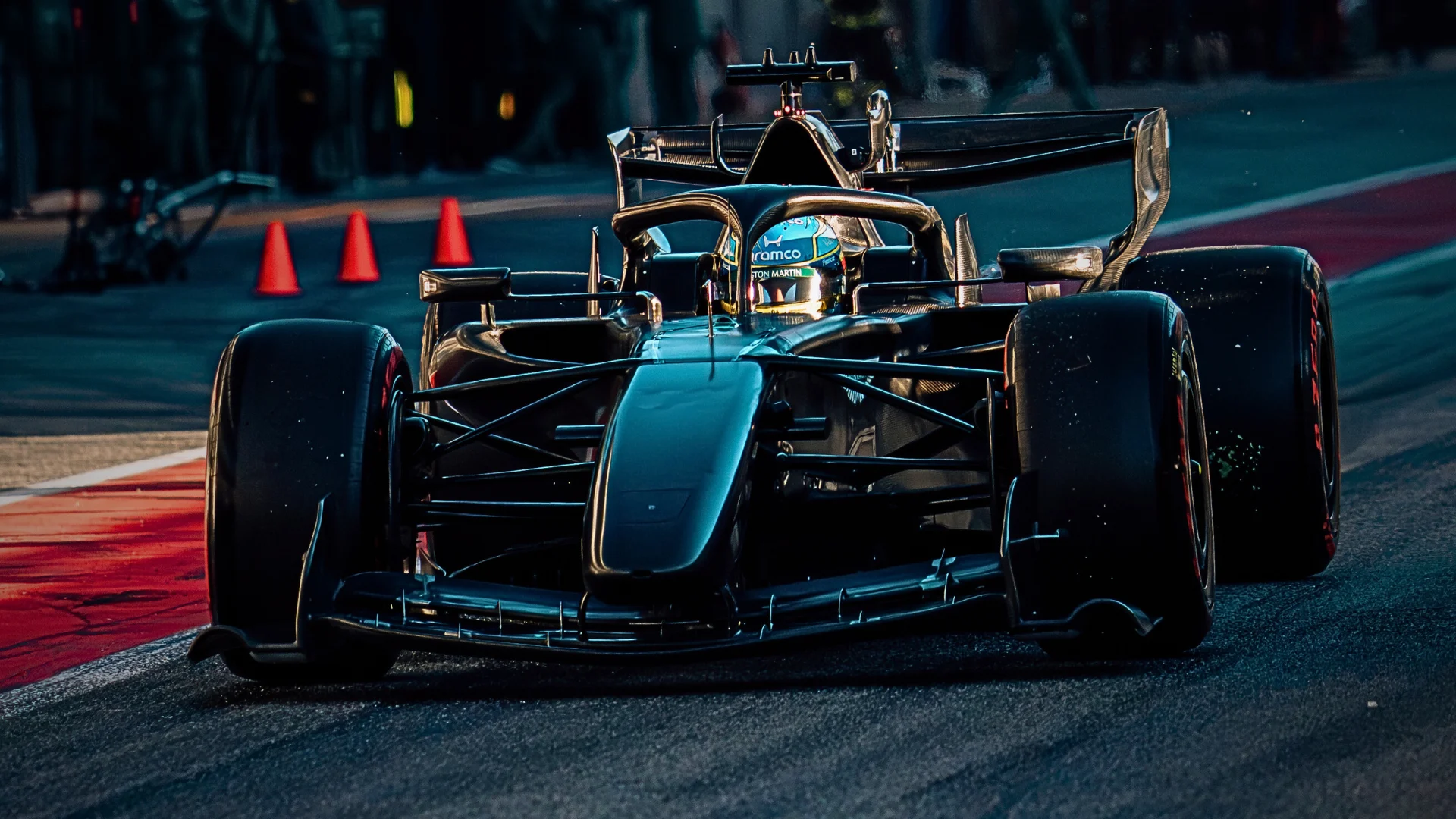
The Aston Martin AMR26 certainly caused a stir when it emerged from the garage on the fourth day of the Barcelona Shakedown, ahead of the team's official launch tonight. As the first Adrian Newey-conceived Aston Martin it has been perhaps the most eagerly anticipated of all the new 2026 cars but, in its dramatic looks and extreme engineering solutions, it exceeded even the wildest expectations.
From the tip of its ‘pelican’ nose to the tail of its rear wing pillar-mounted suspension arms, it’s radically different to any other car. The heavily downward-ramped sidepods, housed around tiny radiator horizontal inlets look more like tubes than pods – and are similar in this respect to the Red Bull RB22.
However, in this case they do not run down to the floor edge, leaving a huge expanse of floor to feed between the diffuser wall and rear wheel. A big cooling exit duct is incorporated just below the cockpit between the sidepod tubes and engine cover.
As with the Red Bull, the sidepod shape implies that a big proportion of the radiator area – including probably the intercooler – may in fact be sited upwards and in the centre of the car.
The front pushrod suspension has its upper rearwards wishbone mounted even further back than on the McLaren, giving the upper wishbone layout an enormous offset triangular shape in plan view. In profile the arms appear to form an aerodynamic cascade to boost the airflow.
.webp)
But the most radical part of the car is at the rear. The upper arms of the pushrod layout are mounted incredibly high and attach to the centre where the rear wing mount runs.
Structurally, this isn’t new; several teams – notably Williams and Red Bull – designed cars in the early 2010s with the wishbones attached to a super-strong central mount, with the wing support running around it. But they were not mounted anywhere near as high as this.
Not only does it create a clear unobstructed space for the diffuser exit but it could potentially even serve as a part-replacement for the now-banned beam wing.
Although the arms cannot by regulation be aerofoil shaped in profile, the way they are mounted, together with a degree of rake in the car itself could certainly induce at least part of that beam wing function of connecting up the flow exiting the diffuser and that being fed to the rear wing underside.
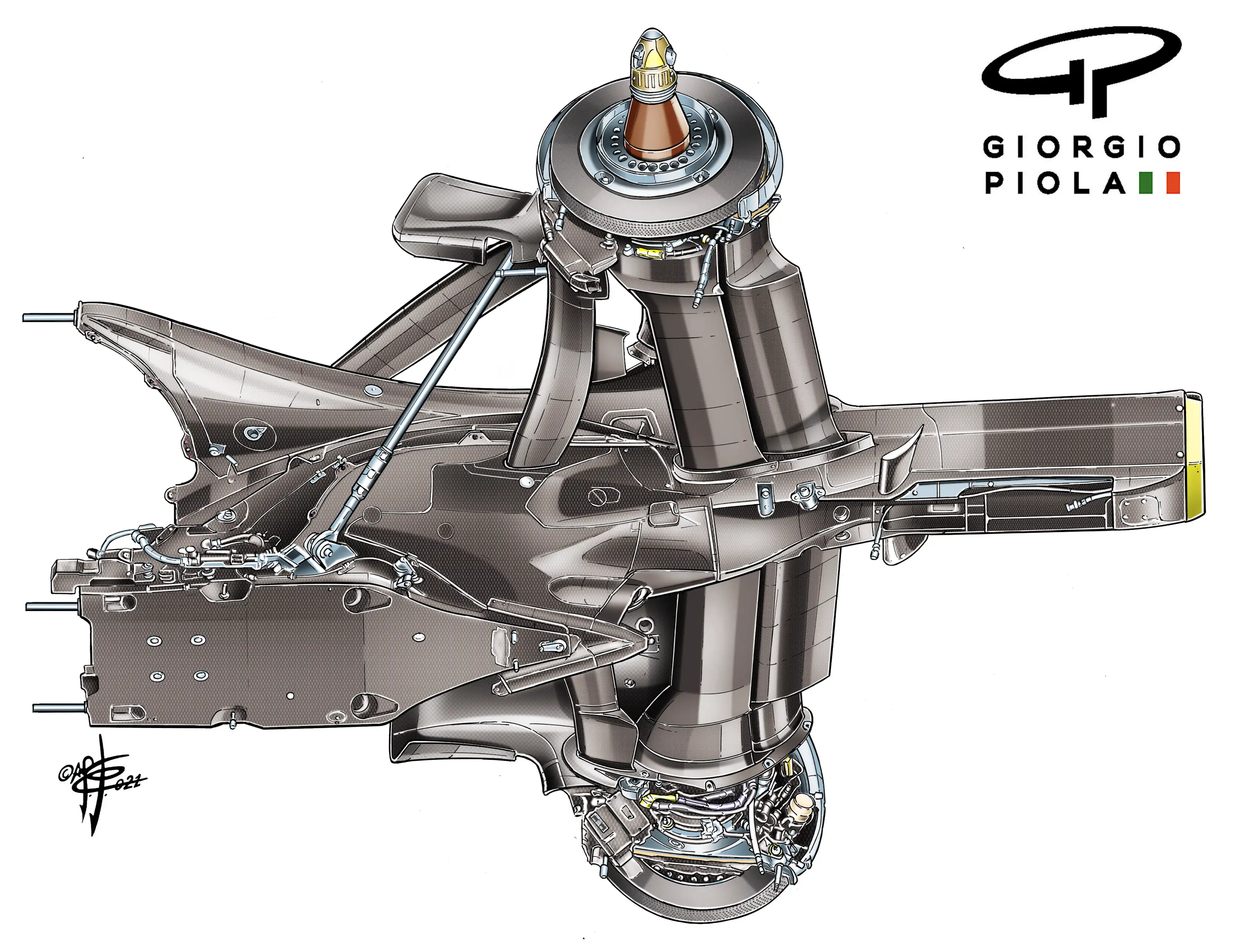
The front wing looks much plainer than those seen on other cars and is probably not the final version.
The nose is as wide as the Red Bull’s. This wide nose/narrow sidepod combination is shared with the Red Bull and could be about maximising the high-pressure area behind the front wheels to direct the wheel wake outward far enough to clear the front of the sidepod and thereafter be pulled into that expanse of exposed floor feeding the rear.
Little is known about the new Honda power unit which drives through Aston Martin’s own gearbox (a first) but the progress of this incredible-looking design is sure to be monitored very closely by everyone as the season gets underway.
.webp)
Next Up
Related Articles
 Hamilton on how Ferrari ‘hit the sweet spot’ in Malaysia
/GettyImages-2298357938.webp) Norris admits McLaren ‘a long way off the pace’ in Malaysia
Norris admits McLaren ‘a long way off the pace’ in Malaysia 'P2 was the maximum we could have achieved' – Antonelli
/GettyImages-2298357933.webp) Russell left perplexed by Qualifying pace in Sepang
Russell left perplexed by Qualifying pace in Sepang Betting5 betting lessons after Verstappen wins Bahrain GP
 BettingOur Bahrain GP Bet Builder after Verstappen takes pole