From papaya rules to flipping coins – how F1 teams have dealt with driver rivalries in the past
Formula 1 teams have taken a vast range of approaches to managing conflict between their drivers over the years.
.png)

Toto Wolff, a Team Principal used to managing intense driver rivalries more than most, faces a new dilemma in the contest between George Russell and Kimi Antonelli. Having a title-worthy car and two drivers performing at the best level of their F1 careers sounds like a problem many teams would dream of having, but it can often spark conflict, leaving bosses eager to find solutions to keep the peace.
The tension between the Mercedes drivers heated up during the Canadian Grand Prix weekend as battles for the lead unfolded and heated radio messages were exchanged, leaving Wolff to publicly set out his latest approach, which involves letting the drivers lead on what they deem acceptable racing, but putting “the handbrake on” as soon as they jeopardise the team’s success as a collective.
Being crowned World Champion is naturally the ultimate goal for every driver, but each one is acutely aware that they will never get there without the support of the entire team, including their team mate from time to time. That uncomfortable truth has led to some explosive clashes over the decades, but each team has chosen to handle them in a variety of ways…
McLaren: Lando Norris vs Oscar Piastri – Papaya Rules
Fresh in the memory are McLaren’s 'papaya rules', which they implemented when Norris found himself as the nearest challenger to Max Verstappen in 2024.
Whilst trying to close down the points deficit, the Briton went wheel to wheel with Piastri on the opening lap of the Italian Grand Prix and lost a position, which cost him crucial points and also allowed Charles Leclerc through to secure a fairytale win for Ferrari.
CEO Zak Brown later explained that they worked on the premise that “it’s your team mate; race him hard, race him clean, don’t touch” – theoretically helping them to avoid introducing direct team orders. However, their philosophy of having two number one drivers only created greater tension when they produced a more dominant car for the 2025 season.
Norris and Piastri didn’t have as many scandalous flash points as most of the duos on this list during their rollercoaster title battle, but they did come together in Canada and Singapore, and the late added threat of Verstappen saw McLaren double down on their racing rules.
They couldn’t completely eliminate the tension that spread across the garages at times, but their approach of letting their drivers race as long as they stayed clean, respectful and didn’t collide saw them claim the Teams’ Championship by a whopping 364 points.
It also worked out pretty well for Norris, who took advantage of his team mate’s mid-season slump to clinch his own title by just two points over Verstappen.
McLaren’s approach has drawn plenty of attention in recent years, but the achievements it reaped left Team Principal Andrea Stella satisfied to continue building on it. Ahead of the 2026 season, he admitted that while they would review their racing principles, they would “keep racing the McLaren way”.
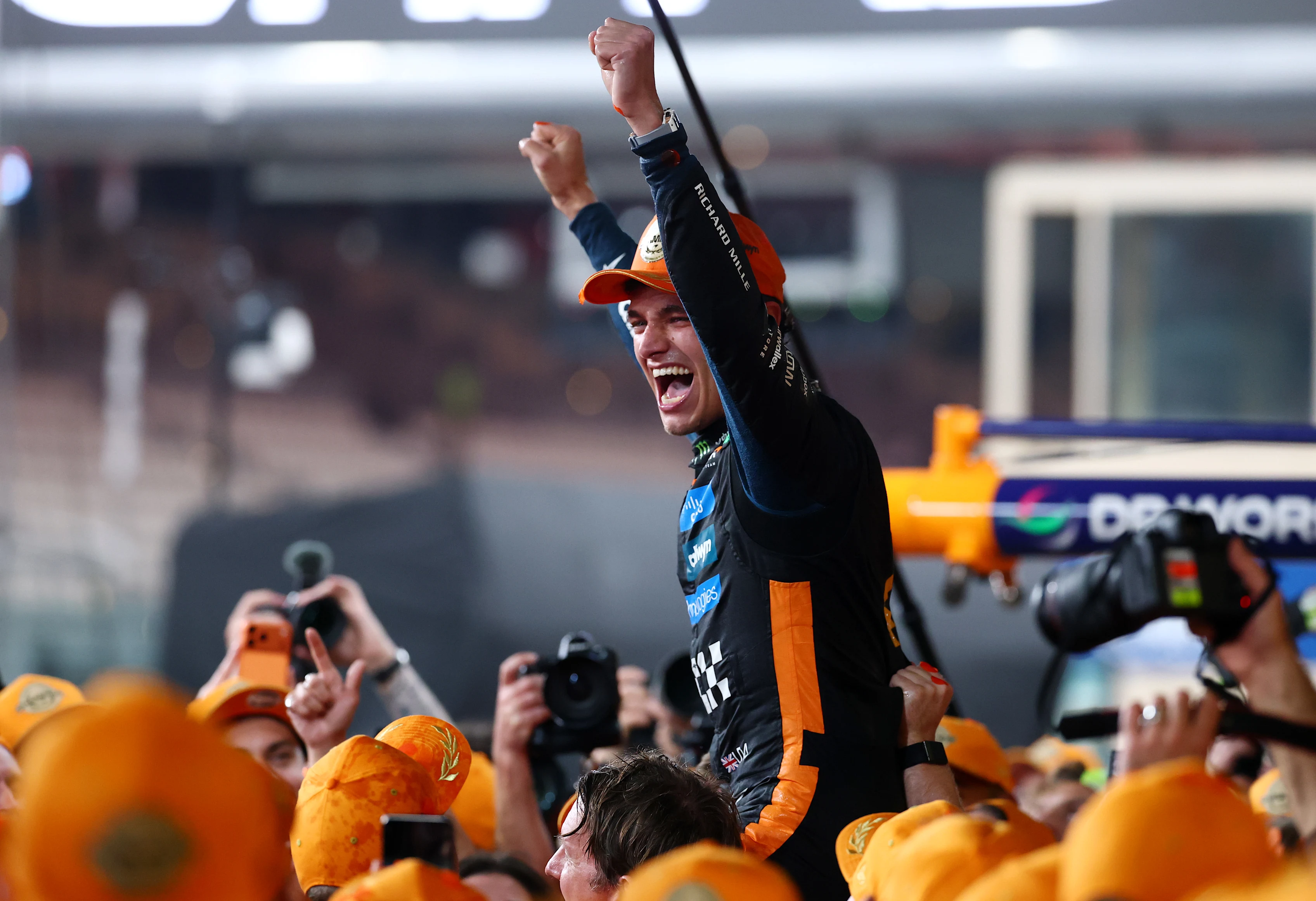
Mercedes: Nico Rosberg vs Lewis Hamilton – Fines and Firings
Iconic, or a major headache? The Rosberg–Hamilton rivalry of the 2010s won’t be forgotten any time soon, but it was also a constant challenge for Wolff. He had led Mercedes to become one of the sport’s leading teams – their first constructors’ title in 2014 started a remarkable streak of eight consecutive championships – but he was prepared to take radical action when faced with these two drivers.
The Rosberg and Hamilton backstory runs deep and is well-documented, the two having spent years in karting together as children before becoming fierce team mates at the Silver Arrows. All that added a distinct personal element to their feud that would eventually see their friendship implode.
From dramatic collisions at Spa 2014 and Austria 2016 to their infamous clash at the 2016 Spanish Grand Prix, Rosberg and Hamilton created a pressure within the team that their colleagues struggled to contain.
Speaking on The High Performance Podcast in 2021, Wolff admitted: “It was very difficult because I came into the team as a newcomer in Formula 1, and Nico and Lewis had been in the sport for much longer. But still, I was able to create an environment where they had to respect the team. Sometimes with an iron fist, or iron grip, and they understood that they couldn’t let us down, they couldn’t let Mercedes down.”
Wolff’s main tactic was to make his drivers think of and prioritise the hundreds of people who had a stake – financial or emotional – in Mercedes, from the team members in the garage and factory to CEO Dieter Zetsche.
And in case that wasn’t enough, Wolff simultaneously made it clear that he would have no hesitation in forcing them to miss races if any further incidents put the wider team at risk.
Following the 2016 Austrian Grand Prix, in which Hamilton and Rosberg collided on the final lap, Mercedes released a statement confirming that while they were still free to race, they would introduce “much greater deterrents to contact between our cars” and hinted at sporting and financial sanctions.
In an interview with The Athletic, Wolff also confirmed that the streak of crashes between the pair forced him to go so far as to threaten them with redundancy to make them understand “how important it is to the interest of the brand and the team above their own”, adding that they were sent an email informing them they were briefly no longer part of the team.
In the end, the heat was only taken out of that pressure cooker when Rosberg abruptly retired after claiming the 2016 title.
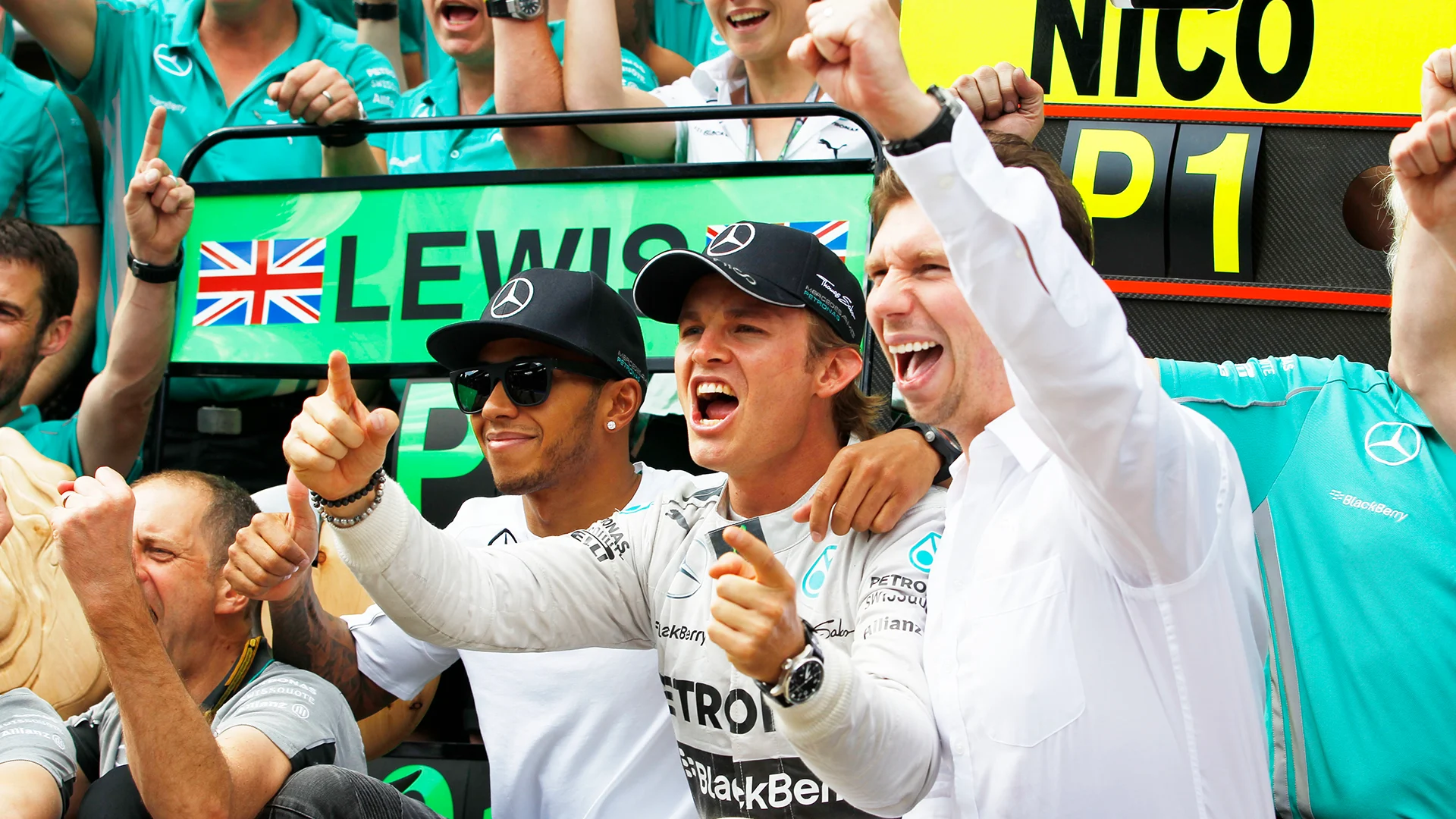
Red Bull: Sebastian Vettel vs Mark Webber – Team Orders
Australian Mark Webber was in his third season with Red Bull, and his eighth in the sport as a whole, by the time 21-year-old Sebastian Vettel joined in 2009, having already impressed at sister team Toro Rosso.
Their first major clash came at the 2010 Turkish Grand Prix when Vettel tried to snatch the lead from his team mate and they made contact, with neither taking responsibility for the high-speed collision. Webber felt that Red Bull had already decided who their priority was, prompting his remark “not bad for a number two driver” after winning in Silverstone later that season.
Once Vettel had been crowned the youngest-ever World Champion, their conflict continued to simmer away over the following seasons, culminating in the notorious ‘Multi 21’ incident when the German driver disobeyed orders to hold position and passed Webber to claim victory in Malaysia 2013.
“It was very difficult for Mark to accept at the time that, and I think if he looked back at it now with perspective and honesty, Sebastian was just quicker,” said Team Principal Christian Horner on the Beyond The Grid podcast. “So therefore Mark would use whatever tool he could to try and get under his skin. As a team, we were just trying to play a straight bat, but every now and again, you’d get a missile coming in and the situation got tougher and tougher.”
After several instances of team orders being ignored, owner Dietrich Mateschitz had no choice but to intervene, with Horner telling the media at the time: "I had discussions with Dietrich and we agreed that Red Bull is not a fan of team orders. Therefore we will not impose team orders at the end of a race. However, we expect the drivers to act on the information they have from the team.”
And as hard as the Red Bull bosses worked to try to bring harmony to the team, this was a rivalry that only mellowed after Webber had retired from the sport.
McLaren: Alain Prost vs Ayrton Senna – Leave it to chance
One of the greatest rivalries in F1 history, Prost and Senna were a pair of ruthlessly ambitious drivers who became locked in a bitter team mate tussle during their time together at McLaren.
The former had firmly established himself as the team's number one after becoming the 1985 and 1986 champion, beating his team mates Niki Lauda and Keke Rosberg before the young and supremely talented Senna joined from Lotus for 1988.
Prost was wary, especially as he suspected McLaren’s new engine partner Honda was keen to support the South American driver. Already anticipating conflict, Team Principal Ron Dennis emphasised that in all their dealings, the team had to come first.
“We will give you equality,” he informed them. “Alain, I will ensure you get equality from Honda, and Ayrton, you will get equality of the car and everything, but your behaviour is critical.”
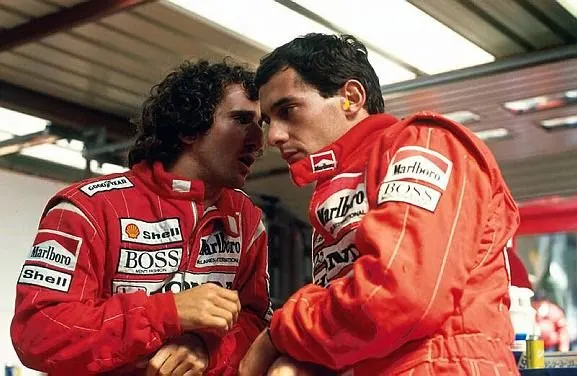
This focus on fairness remains strong at McLaren today, but it didn’t always maintain the peace despite Dennis’ best efforts to use techniques his argumentative drivers couldn’t object to, like coin tosses. Honda would bring three engines and recommend which two should be used before two witnesses watched a coin flip that decided which driver would receive which engine, preventing any allegations of favouritism.
He also initiated non-aggression pacts – agreements that set out when they wouldn’t race each other in specific circumstances – that were hit and miss, like in the 1989 San Marino Grand Prix. Before the race, they had agreed that whoever led into the first turn should stay ahead, but Senna waited until a restart to pass Prost, subsequently breaking the deal in the Frenchman’s view.
“With Ayrton, the first year was really fantastic, a big fight,” Prost reflected. “'89 was again a nightmare because of the situation but at McLaren I had much more of a family team. When Ayrton came, for sure our friendship was a little bit different. I always wanted to support the team and get the best decision for the team.”
With such a severe difference of opinion, their delicate relationship was a constant struggle to manage, and Dennis ultimately resorted to making himself look like “the bad guy” in the hope that they would form an alliance against him.
Despite them winning a title each in their time together at McLaren, Prost eventually had enough and decamped to Ferrari for 1990 – though that did nothing to calm their intense rivalry.
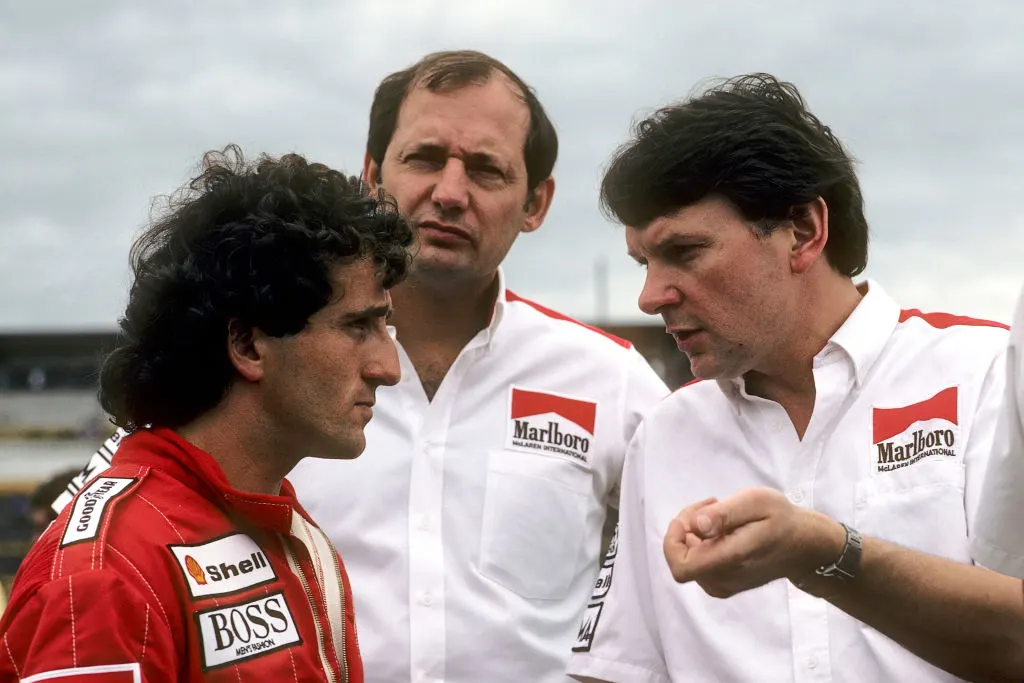
Williams: Mansell vs Piquet – May the best man win... or not
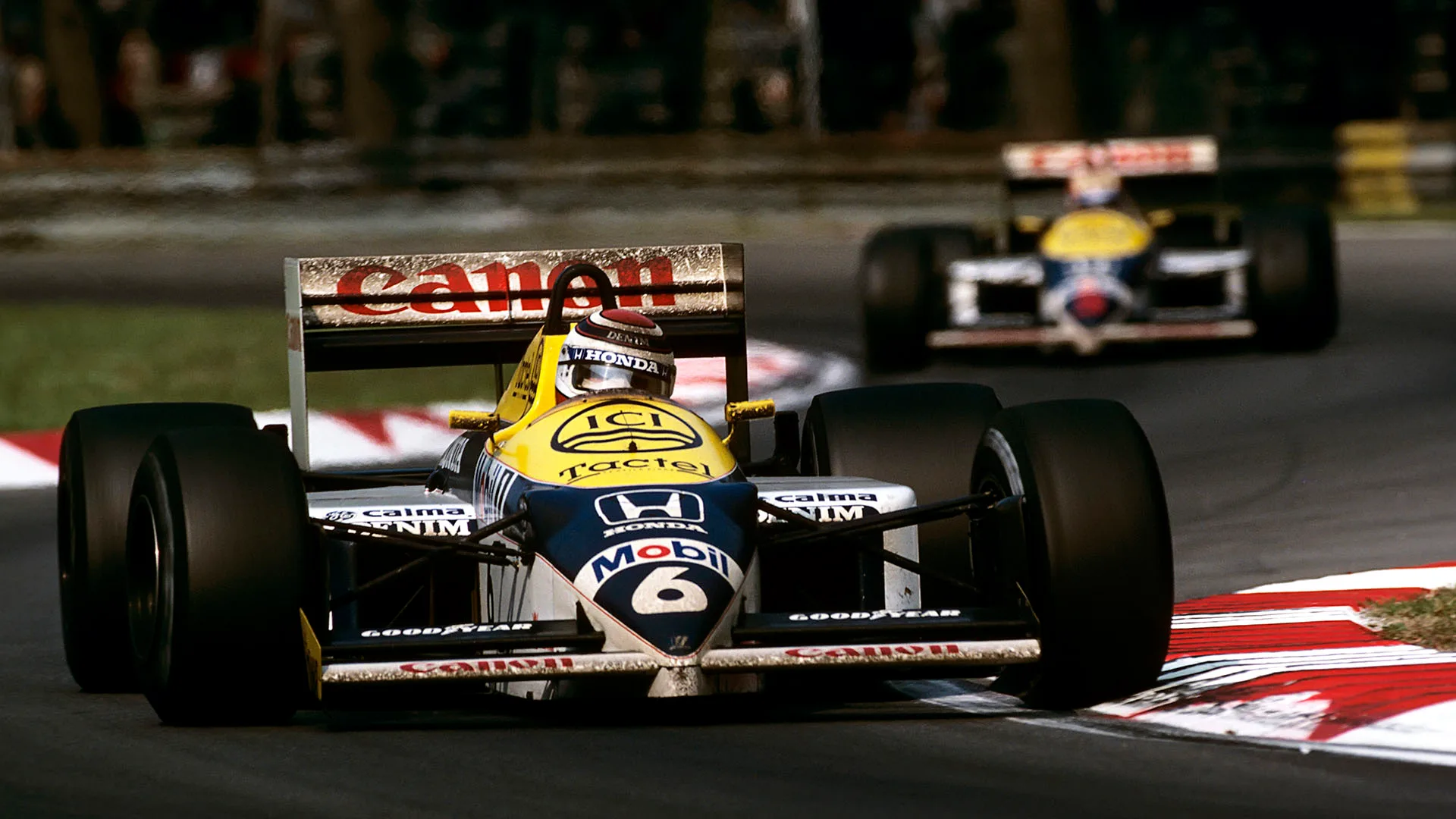
Before Honda joined forces with McLaren, they enjoyed an incredibly fruitful partnership with Williams that was somewhat marred by the bitterly personal feud between Mansell and Piquet. Consecutive wins at the end of 1985 had given the Briton a newfound confidence and he began the following season fully prepared to fight for the title, but Piquet – with two titles already under his belt – had reluctantly left Brabham and sought a return to the top after two inconsistent seasons.
On paper, 1986 was a success as Williams dominated the Constructors’ Championship, but it was overshadowed by Frank Williams’ devastating accident at the start of the year which left him confined to a wheelchair for the rest of his life. His recovery meant that the bulk of managing the team went to Technical Director Patrick Head, who tried to juggle the increasingly conflicting interests of the owner, Honda, and two disgruntled drivers.
Like with Senna later on, the Japanese manufacturer backed Piquet to be Williams’ number one driver, to the point where they encouraged the outfit to fire Mansell and replace him with Satoru Nakajima. Although Williams considered it, they concluded: “Ultimately, it put us in a position where we would be number two to McLaren. There was no way we were going to accept that.”
Despite the team openly refusing to prioritise either driver, scathing insults about Mansell and his wife in the media – which the Briton wrote amounted to “psychological games” that were “out of order” in his autobiography Staying On Track – mid-race squabbles and the narrow loss of the 1986 Drivers’ Championship ensured that the pair were not on speaking terms for much of their time together.
Williams’ focus on victory as a team rather than individuals was so absolute that they rejected the idea of backing any one driver in the title fight, allowing them to race freely and make dents in each other’s championship ambitions as long as they continued to bring points home for Williams as a collective. That policy eventually led to Piquet securing the 1987 title despite winning fewer races than Mansell. There was certainly no love lost between the two, but together they contributed to Williams’ golden era.
Next Up
Related Articles
 All the key moments from the 2026 Bahrain GP in Malaysia
/Bahrain%20finish.webp) AS IT HAPPENED: Verstappen wins epic Bahrain GP in Malaysia
AS IT HAPPENED: Verstappen wins epic Bahrain GP in Malaysia/GettyImages-2298357933.webp) Russell left perplexed by Qualifying pace in Sepang
Russell left perplexed by Qualifying pace in Sepang Verstappen reacts to ‘incredible’ first pole of season
 Verstappen wins Bahrain GP in Malaysia as Russell retires
 Verstappen ‘incredibly proud’ after historic Bahrain GP win