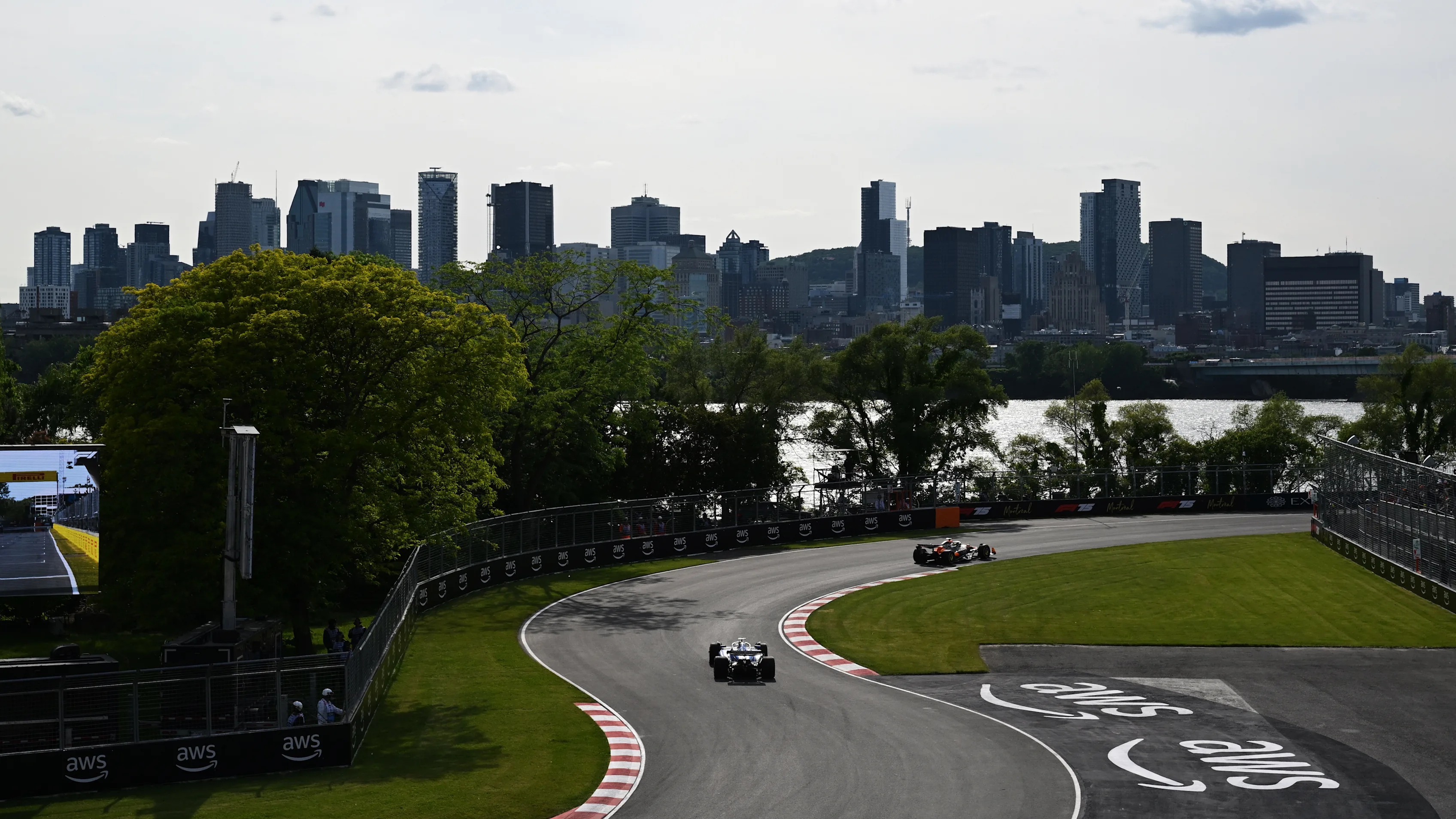
Formula 1 is back on track this weekend with the Canadian Grand Prix. But how much do you know about Montreal’s Circuit Gilles Villeneuve? F1.com present your all-in-one guide…
Key Circuit Gilles Villeneuve statistics
- Circuit length: 4.361km
- Number of turns: 14
- Number of laps: 70
- Race distance: 305.27km
- Lap record: 1m 13.078s – Valtteri Bottas (2019)
When was Canada’s first Grand Prix?
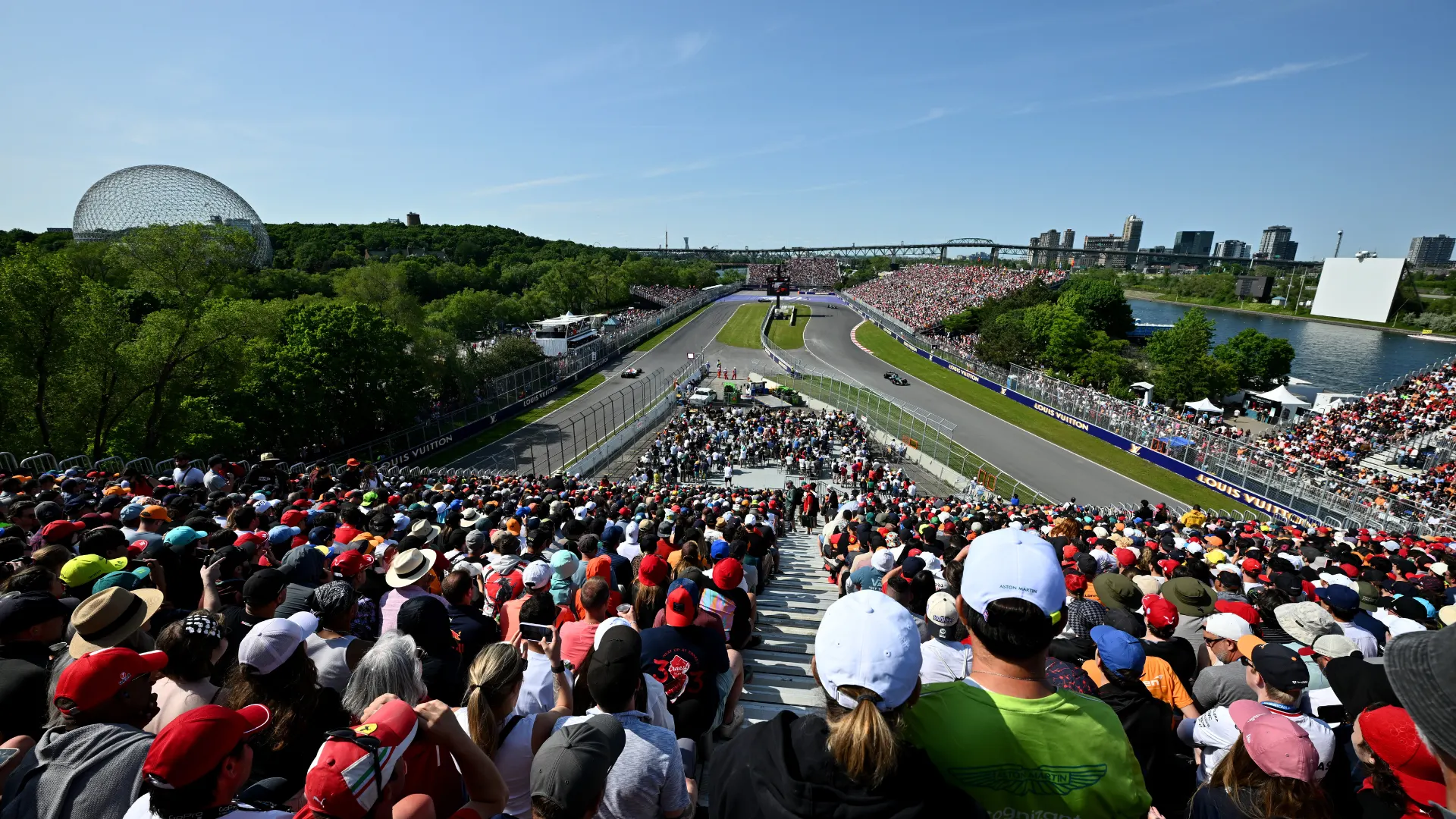
Canada first hosted a World Championship Grand Prix back in 1967, with the event initially alternating between tracks at Mosport Park (in Ontario) and Mont-Tremblant (in Quebec).
Then, for 1978, the city of Montreal (also Quebec) took over with the Circuit Île Notre-Dame – a man-made island situated in the middle of the St Lawrence River that was created for the Expo 67 World’s Fair.
Once the Expo and the 1976 Montreal Summer Olympics had left town, officials decided to make a race track out of the island’s roads, and it has been the country’s home for F1 ever since.
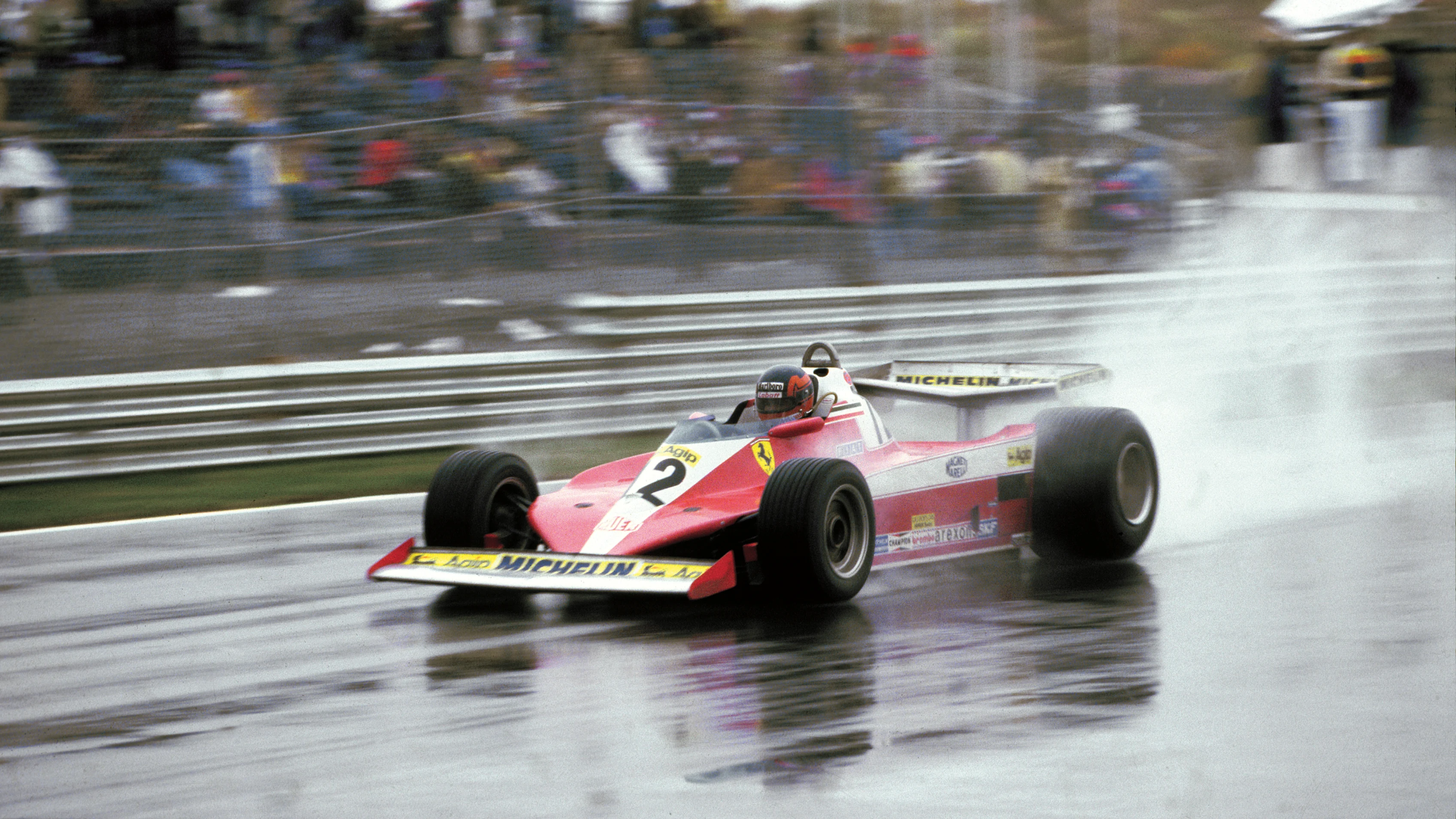
Local hero Gilles Villeneuve fittingly scored his maiden F1 win in the debut 1978 race, before the track was renamed in his honour – to the Circuit Gilles Villeneuve – following his tragic death.
What’s the circuit like to drive?
Montreal’s low-downforce circuit is one of the drivers’ favourites, comprising flat-out blasts, tight, tricky chicanes and an almighty slam of the brakes for the hairpin.
Out of the corners, the track is fast and flowing, while the most iconic piece of the circuit comes right at the end of the lap: the Wall of Champions, so-called after Damon Hill, Jacques Villeneuve and Michael Schumacher all hit it during the 1999 Canadian Grand Prix weekend.
So, what exactly does it feel like behind the wheel of an F1 car?
“Canada is a really nice track to drive, and you get a sense of atmosphere going around it,” says former Renault F1 driver Jolyon Palmer. “Overhanging trees give it the feel of a park, and it feels like a street circuit – in essence, it is.
“There are a lot of slow-speed corners, the walls are very close in a lot of places, but it’s a great racetrack. You need a good front-end to get your car turned into the chicanes, which are pretty much everywhere.
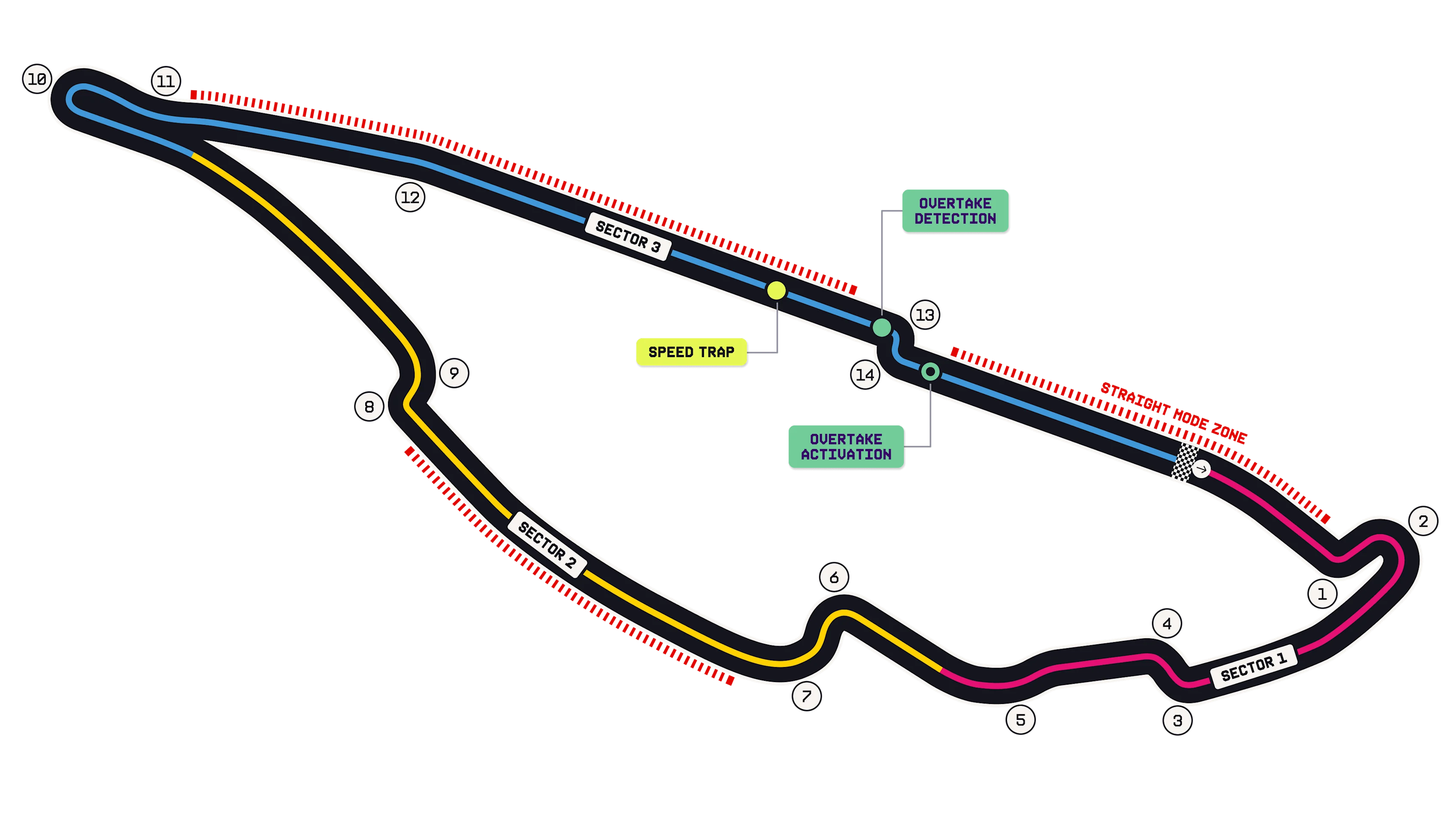
“Then there’s the hairpin, which launches you into an overtaking area at the final chicane. If not there, maybe you’ll have a little sniff of something into Turn 1. Turns 1 and 2 are pretty tricky because you’re approaching Turn 1 very, very fast, arcing to the right as you’re braking, and then hurling speed to the left.
“If you have any sort of moment coming to Turn 1, you’re really off-line or cutting the corner down towards Turn 2, while tyre warm-up sometimes isn’t ideal here, particularly on chillier days in Montreal.”
Canada is a really nice track to drive, and you get a sense of atmosphere going around it. Overhanging trees give it the feel of a park, and it feels like a street circuit.
Where are the Straight Mode zones and overtake detection?
As a reminder, and as explained in our pre-season summary of regulation changes, Straight Mode is a different aerodynamic configuration that allows cars to reduce their drag, making them more efficient when accelerating up towards top speed.
The rear wing continues to open up a gap – just like it did when drivers used DRS (the Drag Reduction System) in the past – but now the front wing also moves. The uppermost front wing elements drop down at the same time the rear wing’s top element does.
This is a mode that is used on every single lap in dry conditions, in every area that is designated for it. Essentially, the car will adapt between two different configurations depending on where it is on the track, providing maximum downforce in corners but then less drag on straights.
In Canada, there are four designated Straight Mode zones, beginning with a run along the start/finish straight, then between Turns 7 and 8, between Turns 9 and 10, and finally between Turns 11 and 13.
Meanwhile, Overtake Mode replaces DRS and is a new power mode that allows a driver to recharge more electrical energy, and generate an additional electrical power profile, so they can sustain a higher speed for a longer period.
There is one detection point per lap for this mode – expected to be out of the final corner on many occasions, leading onto a long straight – and it will be available to drivers on the following lap as long as they stay within a second of the car in front at that detection point.
The Overtake Detection marker at the Circuit Gilles Villeneuve comes just before the entry to Turn 13, while the Overtake Activation line follows at the exit of Turn 14, heading onto the start/finish straight.
Five fun facts about the Canadian Grand Prix
- 2026 will mark the 55th Canadian Grand Prix, and the 45th Grand Prix held in Montreal
- This weekend is the first F1 Sprint weekend to be held in Montreal
- Montreal played host to the longest race in F1 history in 2011, with Jenson Button winning in a time of four hours, four minutes and 39 seconds
- Lewis Hamilton and Michael Schumacher have won the most Canadian Grands Prix with seven victories each
- Ferrari have won the most Grands Prix in Montreal with 11 victories
Next Up
Related Articles
 ‘It’s happened too many times’ – Russell on Bahrain DNF
/Bahrain%20MMD%20Header.webp) UnlockedHow Red Bull cured weaknesses to give Verstappen his first 2026 victory
UnlockedHow Red Bull cured weaknesses to give Verstappen his first 2026 victory Verstappen wins Bahrain GP in Malaysia as Russell retires
 UnlockedWhat To Watch For in the Bahrain Grand Prix in Malaysia
 Verstappen ‘incredibly proud’ after historic Bahrain GP win
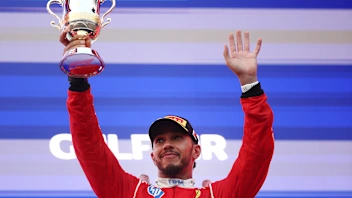 Hamilton reflects on 'bittersweet' comeback podium in Malaysia