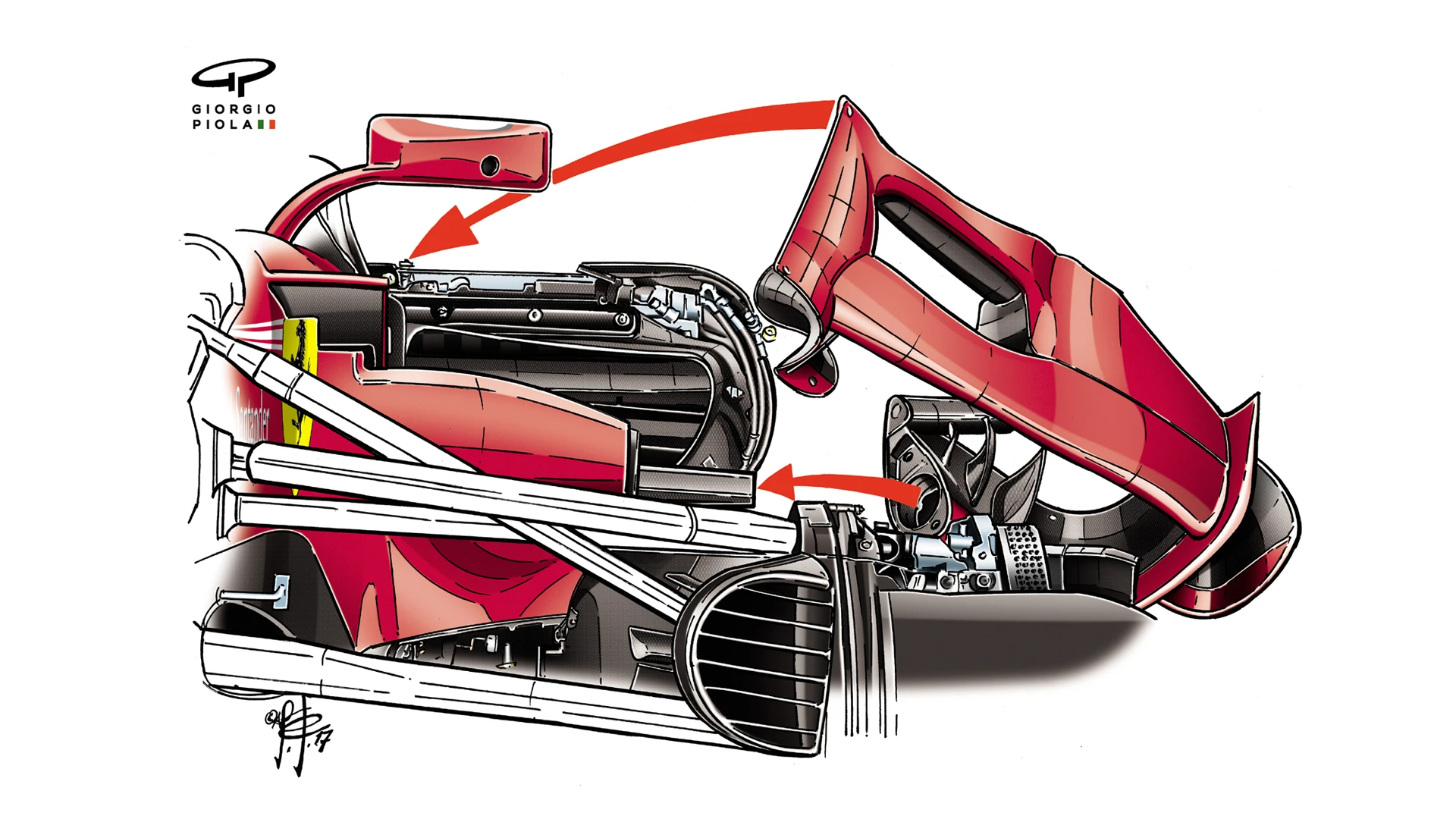
Ferrari’s SF70H boasts a feature quite revolutionary in terms of how it interprets the regulations regarding the car’s mandatory side impact structures - and it has significant performance implications too...
Since 2014 the FIA has enforced very strict rules on the specification of these deformable structures, and on their positioning relative to the car’s survival cell.
What Ferrari have done differently this year is rather than house the structures within the sidepods in the normal fashion, they have placed them inside their unusual aerodynamic fairings immediately in front of the sidepods. This allows the main body of the sidepods to be much shorter, moving them further back from the car’s front axle, meaning less disturbance from the disrupted airflow generated by the front tyres. The drawing above shows how the fairing is attached over the crash structure.
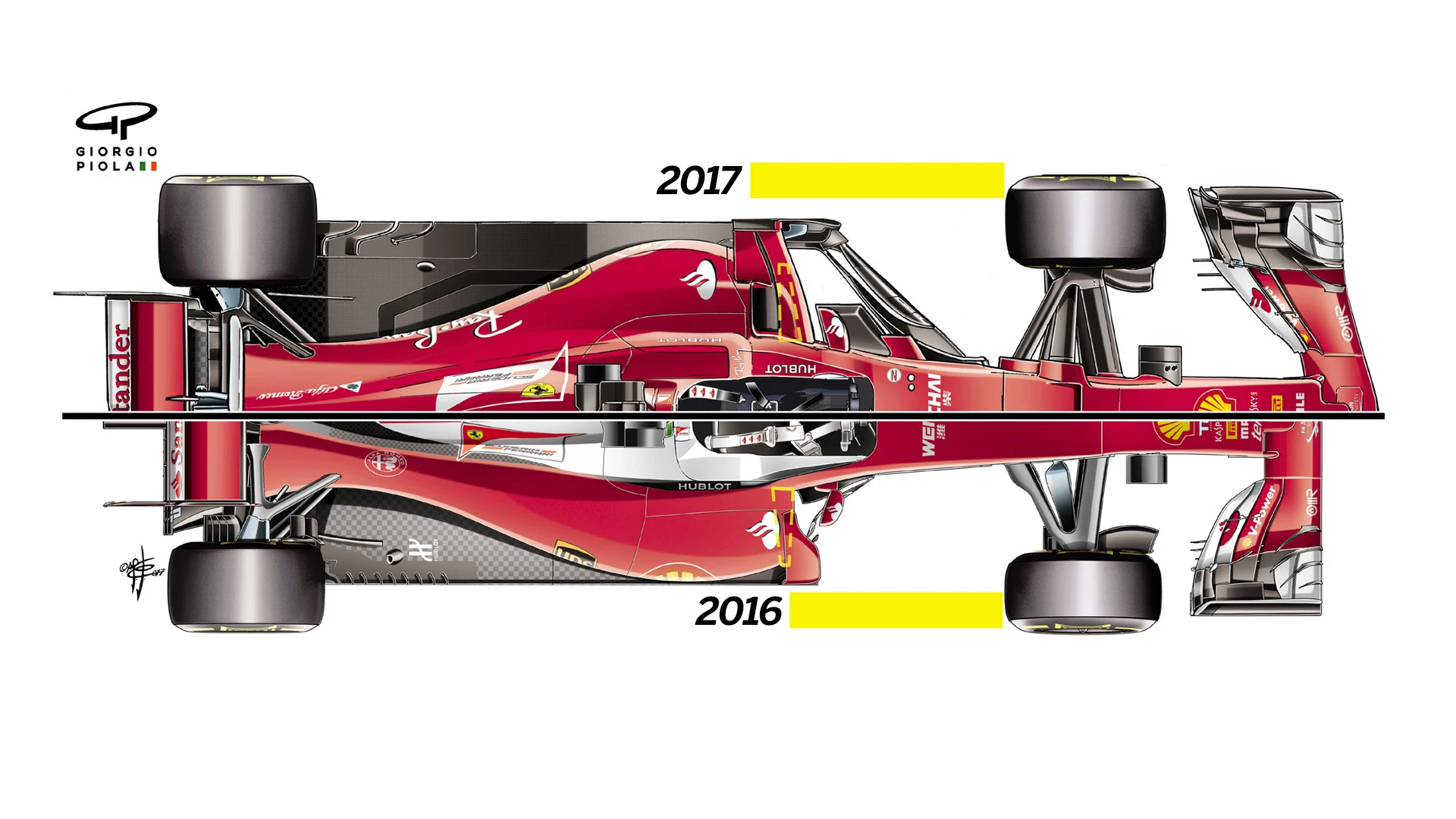
This not only has significant aerodynamic advantages, it means Ferrari have managed to increase the distance between sidepod and axle without having to take the Mercedes route of lengthening the car’s wheelbase to achieve it. The drawing above shows the greater distance relative to the Scuderia's 2016 car (with the crash structure position shown by the dotted lines).
Next Up
Related Articles
 Why Monza has been second time unlucky for Lawson and Tsunoda
 Lindblad pleased with ‘damage limitation’ for Racing Bulls
 Stella on whether McLaren can still target Monza podium
 What the teams said – Qualifying in Italy
 Verstappen happy with Monza P3 despite issue that ‘cost a lot’
 Betting5 betting lessons after Antonelli's Monza masterclass